Introduction

The name for this blog comes from the Hebrew word merchab. Merchab is a masculine noun that appears most often in the Psalms of the Hebrew Scriptures. It means a broad or roomy place, an expansive place, a wide place. Read more...

Showing posts with label fear. Show all posts

May 18, 2009

Fear #3

see May 16, 2009 (Fear #2)

In his book River of Compassion, Bede Griffiths invites us to become the instruments by which the endless cycle of fear is broken. Griffiths writes,
when we have perfect fearlessness,
nothing is afraid of us.
Fearless people are the antidote to the tragic violence both small and great engendered by the constant fear in which we so often live.

So, how do we become fearless people?

We cannot think our way out of fear. Fearlessness is not rational. Being afraid often makes more sense than being fearless. Many things are frightening. People get terribly ill; people lose their jobs; marriages fail; children rebel. It does not matter how good we are; bad things happen to good people.

Fear is a deeply ingrained reaction that springs from the depths of our being. Fear comes unbidden to most of us. It emerges on automatic.

So how do we learn new ways of responding?

We train ourselves in new responses by consciously and regularly choosing a new way of behaving.

I choose a new way of behaving by facing every day the primordial human fear. Human beings fear emptiness. Human beings fear there is nothing, or no one, out there. We fear we are alone in an uncaring, dark and desperate universe.

For twenty minutes twice every day I sit in the face of this fear. I close my eyes; sit completely still; say silently a simple word two or three times, then sit until I notice my mind rushing after some thought. In the tight knot of fear and the chaotic tumble of thinking, I repeat my little word and sit some more. Over and over, I return to that space, that space wherein lies all that I most fear, that space that feels at first empty, frightening, and dangerous.

Over the years of sitting, gradually, slowly, almost imperceptibly as I have returned to this space, a new awareness has begun to grow. I have come to know that, in that place I thought was empty, I am not alone. There is in this dark silence, a deep strength. I see light; I know the Presence of Love. I am not alone. I experience in a place deeper than my fear that there is something/Someone much bigger and more real than all I have ever feared. And I know that this force of Love holds; it does not let me down and therefore I need not be afraid.

I do not know any other way to get to this place than the shear determination to return again and again to that silence, that stillness wherein the God who takes away all fear is discovered to dwell. Through the Psalmist God instructs us, “Be still and know that I am God.” (Psalms 46:10) We get to trust by practicing trust, by stopping our frantic running away from fear. We get to Love by opening again and again to the stillness and the peace. We get to fearlessness by facing our fears and finding at their centre dwells the fearless heart of God.
Read more...

May 16, 2009

Fear #2

see September 25, 2008 (Fear #1)
Flu pandemics, global warming, earthquakes, hurricanes, cancer, heart disease, economic downturn, unemployment, institutional collapse, terrorism, crime, violence, family breakdown – sometimes it is scary to look out the front door.

Henny-Pennies abound. There is no shortage of doomsday prognosticators determined that “the sky is falling, the sky is falling.” There always seems to be good cause for fear.

But the sky has always been falling. I cannot think of a time in my life when someone has not pointed a crooked finger at the dark clouds threatening on the horizon and predicted impending doom. If the solution to fear is to organize the circumstances of life to run smoothly, there is little hope we will ever find peace.

Most fear does not emerge from difficult circumstances. Fear is a trick of the mind. It is entirely possible to lie secure in bed, healthy, well fed, with money in the bank, food in the fridge, and a loving family sleeping quietly in the house, and yet find your heart racing in a panic of terror at some imagined threat lurking at the edge of your mind.

Why do we do this to ourselves? Why do we let fear stalk our nights and threaten our days?

Fear is an addiction. Like all addictions, fear is an antidote to boredom and emptiness. Fear creates a powerful adrenalin rush of intensity. Fear is what we do when we are unwilling to sit quietly and peacefully with our lives as they are.

The writer of I John says, “perfect love casts out fear.” (I John 4:18) The antidote to fear is love.

The problem with fear is that fear produces fear. Actions that spring from fear seldom produce the freedom that is the essential ground for the emergence of love. Fear creates a small world in which we erect walls and build barriers to keep ourselves safe. The more we entertain fear, the smaller our world becomes; the less we are able to open to the expansiveness of love.

The problem with love is that, in spite of what Hollywood would have us believe, love does not come with world-class fire works choreographed to a dolby surround sound symphony.

Love comes softly; the word Jesus used is “secret.” “Your Father who sees in secret will reward you.” (Matthew 6:6) Love is gentle, calm and quiet. It is not given to the splash and dazzle we find so compelling. If we are to let go of fear and find love, we must accept the dull routines of daily commitment. We must listen deeply to our lives as they come to us, opening to the unexpected and sitting lightly to our plans and strategies.

The way forward may not be clear. The obstacles may seem insurmountable. Fear sets in creating panic and paralysis. Love says, “Trust and open; there is a greater reality at work in your life than all the possible futures of which you feel so afraid.”
Read more...

January 3, 2009

Vulnerability

It is the phone call every parent dreads. Our daughter stands by the highway in the snow, clutching her baby, crying on her cell phone, while her husband talks to the police. Their car hit a patch of black ice. It went into an uncontrollable spin, hit a snow bank and flipped onto the meridian, rolling side over side and landing mercifully on its wheels.

After the police, ambulance attendants, and tow truck operator have been consulted, it seems miraculously no one has been hurt. They are able to continue in their dented vehicle over the Coquihalla highway to catch the Tsawwassen ferry back to Victoria.

There is so much to be thankful for. It could have turned out so differently. They spun inches from disaster.

We seldom confront the dimensions of our vulnerability as acutely as when people we love are in harm’s way. But the awareness of the fragility of life lies just beneath the surface. When the protective covering of our normally routine lives is pulled back for a moment, we confront the dark depths of our inability to control the forces of life. We face the closeness of the forces of death.

It is tempting to long for a life more secure, less threatened, a life not balanced so precariously upon the edge of the precipice.

Years ago the delivery of a friend’s perfectly healthy baby went terribly wrong. The baby was choked by her umbilical cord moments before birth. She died in her father’s arms in the delivery room. Months later I asked the mother what she was left with from this experience. She replied without hesitation, “We all live our lives hanging by a thin thread and mostly we don’t see it.”

Every day innumerable unspeakably terrible things happen in peoples’ lives. There is no way to be alive and avoid pain. Suffering is part of the package of life. The only important question is “how will I choose to respond?”

I have been so gratified to see my daughter and her husband make the choices they have made in response to their car accident. There has never been a hint of blame, or accusation from either of them towards the other. No blame is possible in this case, but that would not have stopped lesser people from rushing to point a finger.

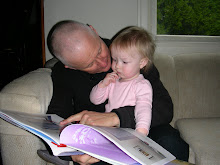
Instead of allowing the terror and raw vulnerability they experienced in this situation to drive them apart, they have clung more closely to one another and to their tiny daughter. They have allowed their hearts to open more deeply.

When we were able finally, all to be together, the room filled with warmth, gentleness, and compassion. This is the strength of love. It grows stronger when adversity is received and shared. Gratitude deepens in the glimpsed possibility of loss. Love holds on and the presence of that Love draws us back to a reality deeper and more real than all the terrible things that might ever happen in our lives.

Earlier in the morning of the accident, our older daughter visiting for the Christmas holidays had been reading aloud some Wendell Berry poems. She read “The Way of Pain,” in which Berry writes

For parents, the only way
is hard. We who give life
give pain. There is no help.
Yet we who give pain
give love; by pain we learn
the extremity of love.

Berry goes on to speak about the pain of Isaac and his father Abraham as they shared in the agonizing dance of sacrifice and the miracle of redemption.

Berry writes of Jesus’ pain and the pain of his mother. But, it is in the midst of that pain that Berry finds hope saying, “Unless we grieve like Mary/ at His grave, giving Him up/ as lost, no Easter morning comes.”

Berry ends by writing about his own son.

And then I slept, and dreamed
the life of my only son
was required of me, and I
must bring him to the edge
of pain, not knowing why.
I woke, and yet that pain
was true. It brought his life
to the full in me. I bore him
suffering, with love like the sun,
too bright, unsparing, whole.

In all this, the parental experience is the experience of being utterly powerless. It is so tempting to try to rush in and bring the pain to an end. It is so tempting to try to control the world around those we love and keep all suffering safely away (as if such power were ever available). But no. It is in the midst of that pain that “we learn/ the extremity of love.” It is by embracing the reality of pain that life is brought “to the full in me.”

I cannot have the depths of love and vulnerability I experience with those closest to me, unless I am willing to allow them to be at times in pain and to accept the pain of seeing them in pain and doing nothing to alleviate their suffering. It is not love, to build an impenetrable fortress around those we love in a futile attempt to keep them safe from any harm.

To love is to choose to stand together in the midst of the chaos of life and walk on holding the same hands, embracing the same shaking shoulders, allowing the tears, doing nothing to diminish the deep ache of our vulnerability.

I wish there were no icy highways. I wish cars would not roll. I wish there were not bombs and guns, wars, starvation, tornadoes, tsunamis, forest fires, windstorms, terminal illness, pollution, crime, drug addiction, marriage break down. I wish life was always safe. I wish those I love would never come to any harm. But, I know that, without the precariousness of life, the richness would be diminished. Without the deep risk of loss, there would be no challenge to trust.

God entrusted the beauty of Jesus to a broken world. The world did all it could to destroy that innocence and purity. But, the gospel tells us, that as long as hearts open and continue to choose love, the power of Christ is born again and again. We humans always have the capacity to meet and pass through all pain, all suffering, all brokenness. We do not need to flinch or turn away. We do not need to pretend it is not difficult. There is always the promise of resurrection. The human spirit held in God cannot be destroyed. The gift of love is given; nothing and no one can destroy this gift as long as we receive it and allow it to flow through us to embrace the other.

My heart grows when I think of a car spinning out of control on the highway and rolling over on its side. My heart grows when I hold my child, my son-in-law, my granddaughter with love and tenderness. Hearts will always grow if we let them. And when hearts grow love and life will always triumph.
Read more...

September 25, 2008

Fear #1 (see May 16, 2009)


September 24, 2008
President Bush's Address to the Nation

The government's top economic experts warn that without immediate action by Congress, America could slip into a financial panic, and a distressing scenario would unfold:

More banks could fail, including some in your community. The stock market would drop even more, which would reduce the value of your retirement account. The value of your home could plummet. Foreclosures would rise dramatically. And if you own a business or a farm, you would find it harder and more expensive to get credit. More businesses would close their doors, and millions of Americans could lose their jobs. Even if you have good credit history, it would be more difficult for you to get the loans you need to buy a car or send your children to college. And ultimately, our country could experience a long and painful recession.


It is a familiar tactic. You can hear it in his voice and feel it creeping up your spine if you pay attention. It is the age-old device, using fear to motivate people to take action you believe is necessary. Fear may work when you are unprotected facing a threatening grizzly bear miles from civilization. But, when we make our choices from a fearful place, we seldom make the best decisions. And, when we use fear to motivate others, there is always a price to pay.

Fear is not a good motivator to generate well-being within the human commiunity.


The problem with fear is that, when we are fearful, we become tense; our heart races; we brace against the undesirable outcome predicted. Operating from this fearful, anxious, braced position disconnects us from the open, expansive gentleness within ourselves that is the place where we can receive wisdom and light. We choke the voice of God when we take an oppositional stance to the realities of life.

Jesus did not have much patience with fear. Over and over, he said, "Do not be afraid." In the Coleman Barks translation of Rumi, the great Persian poet directs us simply to "Move outside the tangle of fear-thinking." Fear always creates a tangle, a mix of motives and a paralyzing sense of anxiety. It is hard to see clearly when our vision is clouded by fear.

Fear does not create a life-giving envrionment for anyone. Fear feeds upon fear, creating more fear. When we act from fear, it is not long before we resort to violence in a futile attempt to gain control of our situation. As soon as we believe we have managed to get one part of life under control, something goes wrong and we are plunged back into a new fear. Terrorism from abroad is followed quickly by economic crisis at home. Some new fear is always close at hand.

Fear arises from the illusion that someone or something has the power to take from us that which we cannot afford to let go. Pema Chodron says, "When we feel inadequate and unworthy, we horad things. We are so afraid - afraid of losing, afraid of feeling even more poverty-stricken than we do already."

But Jesus suggests that "Blessed are you who are poor for yours is the kingdom of heaven." (Luke 6:20)It is in the experience of loss that we begin to discover how much we can do without and open ourselves to the possibility of true riches.

It is ironic that we think things can make us wealthy. Jesus said, "Truly I tell you, it will be hard for a rich person to enter the kingdom of heaven." (Matthew 19:23) When we are rich it is tempting to fall prey to the illusion that our things, our possessions, our talents are the source of satisfaction in life. But no secure sense of well-being resides in anything external to ourselves.

As the present economic panic in North America demonstrates, there is nothing outside of ourselves that we can rely upon as an unfailing source of security, peace or contentment. If we cannot find an inner security that exists independent of external circumstance, we will never experience any true and lasting security.

Most Sundays in church I end the service by saying, "The peace of God which passes all understanding keep your hearts and minds in the knowledge and love of God, and of his Son Jesus Christ our Lord." The Gospel promises a peace "which passes all understanding." This is a peace that does not rely upon stock market portfolios, insurance plans, economic stability or massive military build up. A peace "which passes all understanding," is a peace that comes from knowing "in your hearts and minds, the knowledge and love of God."

Kabir Helminski says, "To be spiritually mature is to be free of the fear of loss, knowing that we are connected to the Source of all generosity." We
are connected to the "Source of all generosity." Therefore, we have nothing to fear. We can be "free of the fear of loss." No matter what may be taken from us, there is nothing and no one that can separate us from the one thing for which our hearts most truly and deeply long. Paul asks
Who will separate us from the love of Christ? Will hardship, or distress, or persecution, or faminine, or nakedness, or peril, or sword?


Paul answers his own question with absolute conviction and unwavering faith.
No, in all these things we are more than conquerors through him who loved us. For I am convinced that neither death, nor life, nor angels, nor rulers, nor things present, nor things to come, nor powers, nor height, nor depth, nor anything else in all creation, will be able to separte us from the love of God in Christ Jesus our Lord.
(Romans 8:35-39)


Freedom from fear comes from the knowledge that nothing can separate us from that inner stream of light and life that is the presence of God known to us in Christ Jesus.

Read more...

August 7, 2008

Boys' Camp

So I am off to Boys' Camp next week at Pioneer Pacific on Thetis Island - me incarcerated on a small island with many many young boys. Much of the leadership comes from St. Philip's. My role is called "staff support." Others will entertain the screaming energetic pre-adolescent and adolescent young men. But, even so, it is not entirely my natural environment. I went to Boys' Camp (not Pioneer) twice, when I was small; the memory still fills me with terror.

I am talking this Sunday in my sermon, just before leaving for camp, about fear. How appropriate. Boys' Camp for me as a child was a frightening experience. I was small, sensitive, quiet, introverted - the perfect vicitm for the wild anarchic energy of Boys' Camp. It seemed to me at the time, that I was always one step away from disaster. I tried to compete, tried to be tough, tried to keep up. But everything about Boys' Camp left me behind. I spent my nights fearing the approach of each new day.

What is it we fear? What would our lives be like if we could live without fear? What might the world be like if we were not afraid of one another, if we were able to live without feeling the need to protect ourselves against the antagonistic forces of the world that seem so often to be organized against us?

Jesus found his followers in a boat in a storm cast about by the waves. They were terrified and "cried out in fear." (Matthew 14:26) Jesus said to them, "Take heart, it is I; do not be afraid." (Matthew 14:27) When we find ourselves fearful, the answer is not to work harder to bring the forces of life under our control. The answer is to "take heart." We need to find that place within ourselves where we can know "It is I." We are not alone. Jesus is with us. There is a strength, a wisdom, a power of life that dwells in our being. We name this power "Christ" and affirm that this presence is always with us and will never let us down no matter what may be happening in the circumstances of our lives.

Experiences like my time as a child at Boys' Camp, occur in our lives to bring us to that place where, along with Peter who in a moment of courage stepped out of the boat to meet Jesus, became overwhelmed and cried out "Lord, save me!" (Matthew 14:30) This is the prayer God loves to answer. This is the prayer that declares, I know I cannot do this thing called life on my own. I know that there will always be forces at work in the world that I experience as hostile and threatening. But as soon as I open myself to the reality of God's presence, I also know that Jesus will immediately reach out his hand and catch me. I am held; the forces of life I experience as threatening, are nothing compared to the force and power of love that dwells within me in the person of the Christ who saves!

Perhaps, as I journey through this week of Boys' Camp, I can hold this strength and be a reminder to others that the presence within them is greater and stronger and more real than any presence that may seem to threaten or intimidate. This is my prayer.

Read more...