Dear Walker,
One of the things that encourages me to continue this conversation with you is your honesty. You demonstrate a refreshing willingness to look at your own ideas, to have them challenged and to accept the possibility that you may need to look at things from a slightly different angle. This openness is one of the primary qualities that will help us gradually grow into the people God is calling us to be.
Your reply to my April 23, 2009 A Response to Walker Morrow #4 makes me feel that I have not adequately managed to communicate what I was hoping to say in response #4. Looking back over my response I see that I did not in fact express myself very clearly. I hinted at my point in relation to Psalm 46:10 when I pointed out that rapha which is traditionally translated as “be still” might also be translated as “sink down.” To “sink down” is to open to a deeper realm of our being. It is to experience the depths of what it means to be human. It is to open to a reality deeper than the intellect, more mysterious than rationality. To “sink down” is to enter the realm of faith.
I do not believe that truth is found in the mind.
cont'd
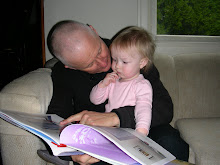
The mind can point us to truth; but the mind can equally be a serious obstacle to our discovery of truth. Truth is more ephemeral than an intellectual formulation can ever fully embody. My granddaughter responds to my request for a hug good bye declaring firmly, “No!” She pauses for a moment before announcing her alternative plan, “ Kiss,” and toddles over to bestow a kiss upon her grandfather; that is truth. It breaks open my heart. I find light and love and beauty. This is where truth is found.
This is why music moves us. It is why we are touched by the beauty of God’s creation and why a magnificent work of art, or a stirring piece of poetry moves something deep within our being. You cannot sum up in words or rational concepts what the kiss of a granddaughter means. You cannot capture the fullness of a symphony or a piece of poetry in precepts and logical equations. You simply have to allow your heart to open beyond rational thought.
In fact the “logic” that you so long for is a poor second cousin to truth. “Logic” functions on the surface of life and leads to sparse results. It is not logical to love an infant. It is not logical to spend hours composing and playing a Bach Cantata. It is not logical to protect the weak and vulnerable, nor to give oneself in service to the poor who “you will always have with you.” (Mark 12:8) The most exalted human instincts emerge from somewhere within the human heart much deeper than logic or reason.
You say it is more “confusion” you fear than chaos. But it is impossible to live apart from either chaos or confusion. The world is a deeply confusing place; chaos abounds wherever you look. In my life I have stood at the graveside with young parents grieving the death of their three week old infant; I have watched as a young teenager died as a result of an utterly arbitrary head injury; and I have celebrated a ninety-second birthday with a senior who lives on her own and recently had her driver’s license renewed. If we choose to open to the realities of life, we must finally acknowledge that life is deeply confusing.
Coming home from Vancouver last weekend my wife and I had lunch in the ferry’s buffet. In the hour and a half that we sat leisurely eating an endless array of beautifully prepared food and watched the most magnificent scenery slip past the window by our table, over 800 children died of starvation. That is confusing. The world does not make sense.
Some years ago, friends of ours joyfully awaited the arrival of their second child. The mother was healthy; the pregnancy had been perfect; the timing was ideal; the whole family looked forward to welcoming this new member into their midst. During delivery, at the last moment before the baby’s arrival, the umbilical cord wrapped around her neck and she suffocated. Instead of a healthy little girl, our friends welcomed a severally brain-damaged infant, who died in her father’s arms shortly after delivery. Life hangs by a tenuous thread. It is not rational; it is not fair; it often does not make sense.
If we hope to “think in calm surroundings” rather “than in turbulent ones,” we will be reduced to a strategy of either denial or lies. We do not live “in calm surroundings.” If we are ever going to discover any measure of peace within the turmoil, chaos, confusion, uncertainty, and terror of life, it will only be as we discover a deep inner peace that I believe can only come from knowing the presence of God in the depths of our being.
The brilliant Old Testament scholar Walter Brueggemann, discussing the importance of the Eucharist in Christian practice, says, “A the table as nowhere else we are made aware that true life is in mystery and not in management.” We cannot manage life. We are not in control. We cannot think our way to safety, or organize our environment to meet our perceived needs. Brueggemann concludes that at the table, “we need only yield our lives over to God.”
The Christian answer to chaos is not control, or understanding. The Christian answer to chaos is surrender.
You do not need to fear that this surrender will “turn into apathy.” We are not surrendering to nothing. We are following the example of Jesus and surrendering into the hands of Love. At the end of his physical life, Jesus’ last words were, “Father, into your hands I commend my spirit.” (Luke 23:46) We are surrendering into the hands of God, the hands of the power that turns the universe. There is no possibility that this act of surrender could ever lead to “apathy.” Surrender into the hands of God can only lead to the life-giving power of resurrection. God is the power of love. Love will always compel us out into the world to encounter all of Creation with a renewed capacity for compassion and goodness. Surrender in fact is not a cause of apathy, but the antidote to apathy.
The “larger picture” you want to “capture” is the picture of Jesus abandoned into the hands of chaos and confusion, sunk in the depths of abandonment and doubt, but finally surrendered into the gracious care of God and therefore raised to new life and power. This picture cannot be “captured;” it can only be lived. And it must be lived in the midst of confusion, doubt, chaos, and even fear. This pattern of love that is our true nature created in the image of God, cannot be finally understood, or reasoned about; we can only open to it with complete abandonment and joyful embrace.
The confusion and chaos of life exist to defeat our proud attempts to understand. The darkness that lurks at the edges of life serves to break open the hearts of those willing to learn the lessons of a broken world. When our hearts are broken open, we discover the strength and power of God’s risen life. The aroma of love is released and we become that image of God in which we were originally created.
Read more...
Showing posts with label mystery. Show all posts
Showing posts with label mystery. Show all posts
May 2, 2009


April 14, 2009
A Response to Walker Morrow #3
Dear Walker
In an attempt to honour my commitment to more succinct posts (April 6, 2009), I will confine my response to your latest comment (Comment on “A Response to Walker Morrow #2) to four points.
1. No human being can as you suggest “ever truly grasp the truth in its entirety.” The Bible impresses upon us the limitations of the human ability to know.
The arrogant assumption that human rationality has absolute understanding lies at the heart of much of the triviality and dysfunction of the human community. Wherever you encounter an unshakeable conviction of absolute truth, you need to proceed cautiously. Truth is characterized more by mystery and humility than by clarity and certainty.
2. The proper goal of the human search is not to “grasp the truth in its entirety,” but to discover wisdom. We discover wisdom as we open to a reality deeper than the limited confines of human rationality. We are more than what we think. There are dimensions to human existence that cannot be contained by the mind.
Wisdom resides along the path of faith. Faith does not contradict reason, but moves beyond reason into the realm of trust, mystery and commitment. Faith opens us to the deep inner reality of the Spirit where we discover the transforming power of life lived in relationship to God. No one thinks his way into transformation. Transformation comes from the deep opening and vulnerability of surrender. As we surrender to God, we more fully reflect our true nature as beings created in the image of God.
3. To grow in our ability to live according to our true nature created in the image of God means to grow in our capacity to love, because “God is love,” (I John 4:16) and “everyone who loves…knows God.” (I John 4:7)
4. If, to love is to know God, then “Whoever loves a brother or sister lives in the light,” (I John 2:10) because “if we love one another, God lives in us, and his love is perfected it in us.” (I John 4:12)
Whether we like it or not, our relationship to God is inextricably bound up with our relationship to other people. We cannot “love” in the abstract. Love must be embodied. We must find a place, beyond the self-interested bonds of biological kinship, where love can be practiced. For me church is the place where I am truly challenged to grow in love.
In church I am required to see God in people in whom I might be disinclined to notice God’s presence. Church holds me faithful to the challenging practices of patience and perseverance that are essential to discovering God’s image where I may have failed to discern God’s Spirit. This is a vital discipline because, as I see God more fully in others, I grow in my awareness of God’s presence in my own life and so my capacity to love expands. By finding God more fully in you, I become more fully the person I was created to be. This is only possible with the faithful discipline of choosing to stay with you, especially at times when I find it most difficult to see God in your life.
The awkward, uncomfortable spiritual practice of choosing to remain in relationship with people who I may feel let me down, betray me, or upset me, is essential to growing deep in faith. Those who choose to love discover truth more than those who believe they think right thoughts.
Read more...
In an attempt to honour my commitment to more succinct posts (April 6, 2009), I will confine my response to your latest comment (Comment on “A Response to Walker Morrow #2) to four points.
1. No human being can as you suggest “ever truly grasp the truth in its entirety.” The Bible impresses upon us the limitations of the human ability to know.
Such knowledge is too wonderful for me; it is so high that I cannot attain it. (Psalm 139:6)
O the depth of the riches and wisdom and knowledge of God! How unsearchable are his judgments and how inscrutable his ways! (Romans 11:33)
For now we see in a mirror, dimly… Now I know only in part. (I Corinthians 13:12)
The arrogant assumption that human rationality has absolute understanding lies at the heart of much of the triviality and dysfunction of the human community. Wherever you encounter an unshakeable conviction of absolute truth, you need to proceed cautiously. Truth is characterized more by mystery and humility than by clarity and certainty.
2. The proper goal of the human search is not to “grasp the truth in its entirety,” but to discover wisdom. We discover wisdom as we open to a reality deeper than the limited confines of human rationality. We are more than what we think. There are dimensions to human existence that cannot be contained by the mind.
Wisdom resides along the path of faith. Faith does not contradict reason, but moves beyond reason into the realm of trust, mystery and commitment. Faith opens us to the deep inner reality of the Spirit where we discover the transforming power of life lived in relationship to God. No one thinks his way into transformation. Transformation comes from the deep opening and vulnerability of surrender. As we surrender to God, we more fully reflect our true nature as beings created in the image of God.
3. To grow in our ability to live according to our true nature created in the image of God means to grow in our capacity to love, because “God is love,” (I John 4:16) and “everyone who loves…knows God.” (I John 4:7)
4. If, to love is to know God, then “Whoever loves a brother or sister lives in the light,” (I John 2:10) because “if we love one another, God lives in us, and his love is perfected it in us.” (I John 4:12)
Whether we like it or not, our relationship to God is inextricably bound up with our relationship to other people. We cannot “love” in the abstract. Love must be embodied. We must find a place, beyond the self-interested bonds of biological kinship, where love can be practiced. For me church is the place where I am truly challenged to grow in love.
In church I am required to see God in people in whom I might be disinclined to notice God’s presence. Church holds me faithful to the challenging practices of patience and perseverance that are essential to discovering God’s image where I may have failed to discern God’s Spirit. This is a vital discipline because, as I see God more fully in others, I grow in my awareness of God’s presence in my own life and so my capacity to love expands. By finding God more fully in you, I become more fully the person I was created to be. This is only possible with the faithful discipline of choosing to stay with you, especially at times when I find it most difficult to see God in your life.
The awkward, uncomfortable spiritual practice of choosing to remain in relationship with people who I may feel let me down, betray me, or upset me, is essential to growing deep in faith. Those who choose to love discover truth more than those who believe they think right thoughts.
Read more...
Subscribe to:
Posts (Atom)